Military Realty of Florida | Jacksonville Real Estate Search
Address Search
Home Sale Calculator
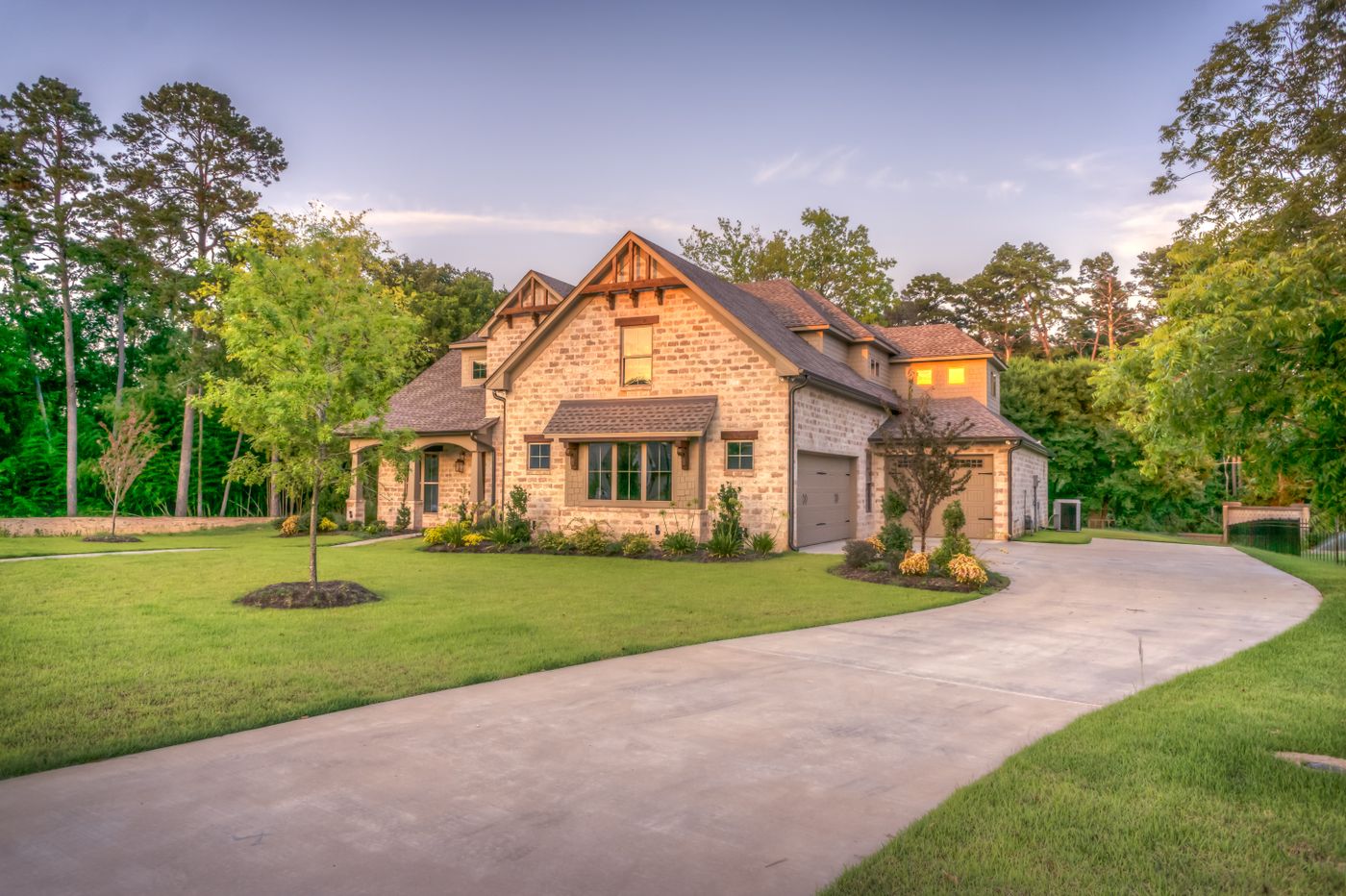
House with a front porch
The number that matters on a Jacksonville sale is the check or the wire after the payoff and the seller lines, not the price on the sign. This page walks through every seller line we see on a Duval closing, then gives you a box that does the subtraction with the dollars you type. The result is a planning estimate. It is not a closing disclosure, and it is not a payoff letter from your servicer.
Military Realty of Florida writes offers and lists houses across Duval and the counties next door. If you want a person to put your real payoff letter and your title quote next to the contract, call (904) 309-0609.
Table of Contents
Quick facts
- Deed documentary stamps in Duval, Clay, St. Johns, Nassau, and Columbia are $0.70 per $100 of the price, or any fraction of $100. A $400,000 price is 4,000 units times $0.70, which is $2,800.
- The 6 percent already sitting in the commission field is a sample so the math is visible. It is not a Florida requirement. Type the percent from your listing agreement.
- The owner's title policy is whatever the title company quoted you. Type that quote. This page does not publish a premium.
- Buyer note stamps and the intangible tax on a new mortgage stay out of the seller total unless your contract moves them.
- Homestead does not change the seller's cash at closing. A buyer who will occupy by January 1, 2027 files for the 2027 tax year by March 1, 2027.
- As of September 28, 2026, the timely window for a 2026 homestead is closed. Ask that county's property appraiser before you assume a late file is still open.
 What a seller net is
Sale price minus the liens you still owe, minus commission, minus concessions, minus the owner's title policy, minus the other seller costs you already know, minus deed stamps. That is the whole formula in the box. If a line is real and you leave it at zero, the estimate is high. If you type a payoff that is only the principal on last month's statement, the estimate is high again, because the servicer will add interest through the payoff date.
People use this number for three practical jobs. The first is deciding whether a list price still makes sense after the loan is gone. The second is telling the next lender, before you are under contract on the next house, what you expect to clear. The underwriter will not take this web box as proof. The underwriter wants the closing disclosure or a seller net sheet from the title company. The third job is comparing two offers that are not the same price, because a higher price with a large credit can clear less than a lower price with a clean contract.
The houses that appear under this article are active Duval County listings, newest first. They are here so you can see what is on the market while you run your own numbers. They are not a set of closed sales, and they are not sorted by seller net. A list price on that feed is the seller's asking number, which is the top line of somebody else's version of this same math.
Every seller line on a Jacksonville closing
Sale price
Use the contract price, not the first list price and not the price you hope to renegotiate after the inspection. If you are still deciding what to ask, run the box at two or three prices so you can see how commission and deed stamps move with the price. Both of those lines are percentages of price, in effect. Stamps are $0.70 per $100. Commission is the percent in your listing agreement times the price. A repair credit does not shrink the stamp base. Stamps are on the consideration in the deed, which is the price, even when you later credit the buyer for a roof allowance. Do not drop the price field by the amount of the credit and also type the credit in the concession field. That counts the credit twice.
Mortgage payoff and other liens
The payoff field is every lien that has to be satisfied for the buyer to get clear title. That is usually the first mortgage. It is also a second mortgage, a HELOC, even a HELOC with a zero balance if the lender still has to send a release, an IRS lien, a judgment, a code-enforcement lien, and an association lien. The box has one field. Add the liens together and type the total, or put the extras in the other-costs field if you want to see them named in your own notes. Either way they have to leave the price before you call the remainder your money.
Order a written payoff from the servicer for the day you expect to close. A monthly statement is the principal as of the statement date. The payoff letter adds per diem interest through a good-through date, and it often adds a fee to record the satisfaction or to fax the letter. If closing slips past the good-through date, the title company orders an updated figure and your net drops by those extra days of interest. Type the payoff letter figure, not the original loan amount and not the balance from the year you bought the house.
Escrow is not a lien. The servicer is holding tax and insurance money that is yours, subject to the bills they still have to pay. After the loan is paid off, the servicer usually refunds the remaining escrow by a separate check or deposit, weeks after the closing, not as a line that increases the wire on closing day. Do not add the escrow balance to your net inside this box. Do not subtract it either. If the closing attorney shows an escrow credit on the disclosure, that credit is real and this box will not have added it. Read the disclosure.
A prepayment penalty would show up on the payoff letter. Most VA loans and most conventional loans we see in Northeast Florida do not have one. Confirm that on your note before you count on it. This box cannot see your note.
Commission, and why the sample says 6 percent
Commission is whatever the listing agreement says. Florida does not set a required rate for the sale of a house. The field on this page starts at 6 so you can see a commission line appear in the sentence under the box. Change it to the percent on your agreement before you use the net for anything serious. If your agreement is 5 percent, type 5. If it is 2.5 percent to the listing side and you are also paying a stated buyer-broker amount that is still a percent of price, add those percents only if both of them are percents of the same price and both of them are your obligation. Read the agreement. Do not assume a number you heard about somebody else's listing.
Some agreements include a flat brokerage fee on top of a percent, or a flat fee instead of a percent. The percent field multiplies the sale price. A flat fee does not belong in that field. Set the percent to the percent portion only, and type the flat fee into other seller costs. If the entire brokerage charge is a flat dollar amount, set the percent to zero and type the dollars into other seller costs. Leaving 6 in the field and also typing the flat fee double-counts the commission.
On a $400,000 price, 6 percent is $24,000. Five percent of that same price is $20,000. Two and a half percent of $360,000 is $9,000. Those are arithmetic examples so you can check the box. They are not a menu of rates, and they are not a quote from this brokerage. The listing conversation is where the percent gets written down. The page that describes how we list a house is selling.
Deed stamps, with the $400,000 example
Florida charges documentary stamp tax on the deed under section 201.02. In every Florida county except Miami-Dade the rate is $0.70 per $100 of consideration, or any fraction of $100. Duval, Clay, St. Johns, Nassau, and Columbia all use that $0.70 rate. Miami-Dade is a different rate and it is not in this box. If you are selling in Jacksonville, Orange Park, St. Augustine, Yulee, or Lake City, you are in the $0.70 counties.
The rounding rule is the part people miss. The price is divided into $100 units, and any remainder starts a new unit. A price of $400,000 is exactly 4,000 units. Four thousand times $0.70 is $2,800. A price of $400,050 is not 4,000.5 units. It rounds up to $400,100 of taxable consideration, which is 4,001 units. Four thousand one times $0.70 is $2,800.70. Fifty extra dollars of price added seventy cents of tax, because the fraction of $100 still counts as a full unit. A price of $350,000 is $2,450. A price of $350,250 rounds up to $350,300, which is 3,503 units and $2,452.10. A price of $275,000 is $1,925. A price of $525,000 is $3,675. A price of $199,900 is exactly 1,999 units and $1,399.30.
The box does this rounding for you. You do not add the $2,800 on top of a $400,000 price by hand unless you are checking the sentence under the box. Custom on the contracts we close in Northeast Florida is that the seller pays the deed stamps. The contract can put them on the buyer. This box always subtracts them from the seller. If your contract truly moves deed stamps to the buyer, the estimate on this page will be low by the stamp amount, and you should add that amount back when you read the sentence. There is no switch in the box for that. The contract is the switch.
One narrow deed-stamp exemption exists for some transfers of the marital home in a divorce, under section 201.02. That is a divorce transfer question for the closing attorney, not a discount you type into a normal arm's length sale. This page does not turn that statute into tax advice. If you are selling to a stranger, assume the stamps are due.
Seller concessions and repair credits
A concession is money you agree to give the buyer at closing. It might be a closing-cost credit, a rate buydown the buyer asked for, or a repair credit after the inspection instead of you hiring the roofer. Type the total of those credits in the concession field. They reduce your net dollar for dollar. They do not reduce the price for stamp purposes. If you would rather lower the price by $8,000 than credit $8,000, that is a different contract. The lower price reduces commission and reduces stamps a little. The credit reduces neither. On a $400,000 price, $8,000 of credit costs you $8,000. Dropping the price to $392,000 instead costs you $8,000 minus the commission and stamps you no longer pay on that $8,000. Run both versions if the buyer will accept either structure. The loan program sometimes prefers one structure over the other. Ask the buyer's lender before you rewrite the contract. This page does not guess a concession cap.
Owner's title policy
The owner's title policy is the insurance the buyer receives that title was good on the day of closing, subject to the exceptions in the policy. In the contracts we see here, the seller customarily pays for that owner's policy. The lender's policy, which protects the buyer's lender, is customarily the buyer's line. Those are customs. The contract can say otherwise.
You type the owner's premium from the quote you were given. The field starts at zero on purpose. We are not going to invent a premium and drop it into your net. Florida title insurance has filed rates, and the quote still depends on the price, on prior policies, and on what the title company is actually issuing. Leave the field at zero only while you are learning the other lines, and remember that zero makes the net look better than the closing will. When the title company or the closing attorney sends the quote, replace the zero.
Prorations
Florida property taxes are paid in arrears. The bill that arrives in the fall covers the calendar year that is already underway. At a closing, the seller is usually charged for the days from January 1 through the day before closing, and the buyer is charged for the rest of the year, unless the bill has already been paid. If you close in September and the November bill has not been paid, expect a tax debit on the seller side. If you already paid the bill, expect a credit for the buyer's share of the year. The direction depends on whether the collector has been paid.
The sheet does not look up your tax bill and it does not count the days. If the bill is unpaid, type your share from January 1 through the day before closing on prorated property tax. If you already paid the bill, type the buyer's share of the year on the credit line. That credit adds to the check.
Do not invent a tax bill to make the proration look finished. The property appraiser sets value. The taxing authorities set the millage. The tax collector sends the bill. Two houses on the same street can sit in different cities and different districts. Read the bill or the title company's estimate. Duval's tax collector has published the statewide-style discount on the bill: 4 percent if paid by November 30, 3 percent by December 31, 2 percent by January 31, 1 percent by February 28, then due by March 31 before the bill is delinquent. Other counties use the same Florida discount statute. Confirm the due date on that county's bill. Who receives the benefit of an early-pay discount is a closing-worksheet question. Do not assume you personally keep a discount the buyer paid after you were already off the title.
Rent, if you have a tenant, is also prorated. Prepaid rent for days after closing is usually a seller debit. A security deposit is usually transferred to the buyer, and that transfer is your money leaving, even though it was never fully yours while you held it under the lease. Type known amounts into other costs. If you do not know them yet, do not pretend the net is final.
HOA dues, estoppel, and assessments
If the house is in an association, the closing needs an estoppel. The estoppel states the dues, whether you are current, and whether a special assessment or a violation fine is sitting on the account. The estoppel fee itself is commonly a seller cost here. Dues are prorated. If you paid the quarter ahead, you may be credited for the days after closing. If you are behind, you are debited. A special assessment the association has already approved can be a large seller debit or it can stay with the property, depending on the contract and the estoppel. A community development district assessment on the tax bill is a different animal. Sometimes it is paid annually with the taxes. Sometimes a buyer or a contract requires the bond portion to be paid off at closing. Payoff of a CDD is a seller cost only when the contract makes it one. Do not type a guessed assessment. Type the number from the estoppel or from the title worksheet once you have it, in the other-costs field, or in concessions if you agreed to pay it as a credit.
Home warranty
A home warranty is optional. Some sellers offer one to make the listing easier to show. Some buyers ask for one in the contract. If you are paying for it, type the price the warranty company quoted into other seller costs. This page does not publish a typical warranty price. A warranty is not a substitute for the inspection, and it is not a reason to skip a repair credit the buyer is actually asking for. If nobody is buying a warranty, leave it out of the other-costs number.
What the sample inputs do
The sheet opens at a sale price of $400,000, payoff of $250,000, commission of 6 percent, and every typed seller charge at $0. Commission is $24,000. Deed stamps are $2,800. The bottom line is $123,200. That is 400,000 minus 250,000 minus 24,000 minus 2,800. The sample buyer loan of $320,000 puts note stamps of $1,120 and intangible tax of $640 on their own lines. Those two are not in the $123,200. Title at zero makes the check look better than the closing will. Replace it when the quote arrives.
Change the commission to 5 percent and type $8,000 in the seller credit, and keep the other zeros for a moment. Commission becomes $20,000. The check is $400,000 minus $250,000 minus $20,000 minus $8,000 minus $2,800, which is $119,200. The credit cost $8,000. It did not reduce the stamps.
If the first mortgage payoff letter is $250,000 and a HELOC payoff letter is $15,000, type $265,000 in the payoff field. The net falls by that extra $15,000. The box will not itemize the two loans. Your closing disclosure will.
Contract price. A seller credit does not lower this line, so deed stamps stay on the full price.
Use the payoff letter through the closing date. Add a second mortgage or any lien that has to be released.
The percent in the listing agreement. Florida does not set this rate. Six is only the sample.
Auto. $0.70 per $100 of the sale price, rounded up to the next $100. Duval, Clay, St. Johns, Nassau, and Columbia.
Type the quote. Zero is not a premium. The lender's policy is usually the buyer's line, not this one.
Closing-cost credit or repair credit. It comes off your check. It does not reduce the stamp price.
The letter fee. A dues proration is not this line. A debit for unpaid dues goes in other charges. A credit for dues you paid ahead goes on the credit line.
Florida taxes are paid in arrears. If the bill is unpaid, this is your share from January 1 through the day before closing. Type the title company's figure. This sheet does not count the days.
Warranty, survey if you pay it, a flat brokerage fee, or buyer loan taxes if the contract puts them on you.
If you already paid the tax bill, this is the buyer's share of the year. Prepaid association dues go here too. This line adds to your check.
This is the buyer's mortgage, not what you owe. It is here only to calculate the next two lines.
Auto. $0.35 per $100 of the buyer's new loan, rounded up. Buyer cost under section 201.08. Not in the total. If your contract says you pay it, type that amount into other charges.
Auto. $2 per $1,000 of the buyer's new loan. Buyer cost. Not in the total. Same rule: type it into other charges only if you agreed to pay it.
Estimated to seller
Estimated check to you.
$123,200.00
What the box leaves out
Note stamps and intangible tax are on the sheet, calculated from the buyer's new loan. Note stamps are $0.35 per $100 of that loan. Intangible tax is $2 per $1,000. They are buyer costs. They are not in the seller total. If the contract says you pay them, type that dollar amount into other charges. The loan field does not invent a loan. The sample $320,000 is only there so the two lines are not zero.
Prorated taxes, HOA dues, and a survey are inside the estimated net only if you typed them into concessions, title, or other costs. The box does not have a separate survey field. In many of our contracts the buyer pays for a new survey if the lender wants one. If your contract puts a survey on the seller, type the quote. Until you do, it is missing.
The sheet always subtracts deed stamps, even if your contract makes the buyer pay them. It always subtracts the commission percent you leave in the field. A credit for taxes or dues you already paid is the credit line. If you leave that line at zero, the check is short of the real net by that credit. If you forget a lien, the disclosure net will be lower.
The box does not know about a per diem that runs past the payoff good-through date, a courier fee, a home-office fee from the association, a municipal lien search charge, unpaid water or sewer that the city will not release, or a seller attorney fee if you hired your own lawyer on top of the closing. Florida closings are handled by a title company or a closing attorney. You do not have to hire a second lawyer to sell. If you do, that invoice is yours unless the contract says the other side pays it. Type it into other costs when you know it.
The box does not check whether the buyer can actually close. A pretty net on an offer with a financing contingency is still an offer. The net becomes money when the deed is delivered and the payoff is sent. Wire fraud is a real problem on closing day. Call the closing office at a phone number you already had, not a number that arrived in a last-minute email, before you wire anything. Nothing on this page is wiring instructions.
Seller costs as a category, without subtracting your payoff, are a different question from a net. This box answers the net, which means the payoff is in the subtraction. If you only wanted the cost lines, do not treat the estimated net as a cost total. Pull the commission, stamps, title, concessions, and other costs out of the sentence and add those. Leave the payoff out of that particular sum. The payoff is debt you already owed. It is not a tax on the sale. It still has to be paid or the buyer does not get the deed.
Homestead does not change the seller's net
Your homestead exemption does not add a line to the seller side of the closing statement, and it does not remove one. The exemption, if you have it, may already be reflected in the tax bill that the title company prorates. The proration uses the bill or an estimate of the bill. The box does not apply Save Our Homes, and it does not apply the $25,000 and additional non-school exemption. You should not type the exemption amount into other costs as if it were a fee. That would understate your net for no reason.
Save Our Homes, section 193.155, caps how fast the assessed value of a homesteaded property can rise. For 2026 the cap is 2.7 percent, the lesser of 3 percent and the CPI change of 2.7 percent. That is a cap on assessed value, not a cap on the tax bill. Millage is set by the taxing authorities. A fall seller does not "cash out" the cap at the closing table. The cap stays with the homestead rules, and a buyer starts a new just-value conversation with the appraiser after the sale. Portability of the assessment difference is the buyer's filing on the next homestead, Form DR-501T, filed with the new county's property appraiser, generally with the new homestead application. The amount that can transfer is capped by statute. This page will not invent a dollar figure for portable savings. If you are the seller and you are also buying the next house, you file portability where the new house sits, not on this net sheet.
A fall seller should still know what the buyer has to do, because buyers ask, and because you may be that buyer on the next street. Florida homestead is section 196.031. The application statute is 196.011. You must own legal or equitable title and occupy the house as your permanent residence on January 1 of the tax year. A buyer closing in the fall of 2026 who will occupy by January 1, 2027 files for the 2027 tax year. The timely deadline is March 1. In 2026, March 1 fell on a Sunday, so the timely deadline was Monday, March 2, 2026. The St. Johns County Property Appraiser and the Nassau County Property Appraiser both published that. As of September 28, 2026, the timely 2026 window is closed. Late filing is only with extenuating circumstances, generally until 25 days after the county mails the TRIM notice, which is mid to late summer. Do not treat the late window as something that is still open. Ask the appraiser that day.
The 2026 homestead numbers, confirmed by the St. Johns County Property Appraiser and matching the Florida Department of Revenue CPI notice, are a full homestead total of $51,411. The first $25,000 comes off all levies, including school. The additional $26,411 comes off non-school levies only, and only off assessed value between $50,000 and $76,411. The band from $25,001 to $50,000 stays taxable. None of that arithmetic belongs in the seller's payoff. It belongs on the buyer's future tax bill, after the buyer files and after the appraiser approves it. The first bill a fall buyer sees may still be based on the seller's situation. The new exemption, once approved, shows on a later TRIM.
One permanent residence. A residency-based exemption in another state can knock out Florida homestead. A Social Security number is mandatory under 196.011. A wrongful exemption can create a lien, a 50 percent penalty, and 15 percent interest under 196.161. A clerical error by the appraiser is treated differently. After an exemption is approved it renews. The appraiser mails a renewal card. You refile if ownership, marital status, or residency changes. If the house is in a trust, the applicant needs beneficial title. Bring the trust. Have the closing attorney or a Florida attorney confirm that the trust qualifies. That is not something this calculator decides.
There is also a senior local-option extra exemption. The person must be 65 on January 1, and the 2026 household income limit is $38,686. Counties adopt the extra exemption or they do not. Do not assume every county grants an extra $50,000. Ask that county's appraiser. A long-term senior exemption, 25 years in the homestead with a just value under $250,000, is a separate local option. Again, ask the county. None of these senior lines change today's seller wire.
How to file in Duval
If the house you are buying, or the house your buyer is moving into, is in Duval County, the homestead application goes to the Duval County Property Appraiser. The online filing page is homestead.coj.net. The phone is (904) 255-5900. In person the office is 231 E. Forsyth Street, Suite 260, Jacksonville, FL 32202.
The deed has to be in the owner's name before the online system will take the application. The office says to allow about 60 days after closing for the deed to post. If you are inside that window and the deed has not posted, file in person. Do not wait until March and hope the website caught up. The online session does not save. Plan about an hour. Have a Florida driver license or ID that shows the homestead address, including the number and the issue date, the vehicle tag, voter registration if you are registered, date of birth, Social Security number, the date you became a Florida resident, the date you occupied the house, the purchase date, and the mailing address on your last IRS return.
Adding a person, or adding an extra exemption onto a homestead that already exists, has to be done in person. Spouses who both need to be on the exemption should not assume a single online session finished the file. Ask the clerk at the window if you are standing there with a second ID.
The tax bill itself comes from the Duval Tax Collector, not from the appraiser. The collector's pages are jacksonville.gov tax collector and duvaltc.com. Phone (904) 255-5700. Email taxcollector@coj.net. The main office is 231 E. Forsyth Street. Hours are Monday through Friday, 8:30 a.m. to 4:30 p.m. The appraiser sets value. The taxing authorities set millage. The collector sends the bill and takes the payment. The deed records at the Duval County Clerk of Courts. This page does not invent a clerk website. Your closing attorney records the deed. You do not stand in line at the clerk to finish a normal sale.
Clay, St. Johns, Nassau, and Columbia
The deed-stamp rate does not change when you cross those county lines. The homestead office does. File with the appraiser for the county where the house sits. A Duval sale and a Clay purchase means the Duval collector prorates the old house and the Clay appraiser takes the new application.
Clay County
Clay County Property Appraiser Tracy Scott Drake: ccpao.com. Online homestead: exemption.ccpao.com. Phone (904) 284-6305, extension 1. The office is on the second floor of the County Administration Building, 477 Houston Street, Green Cove Springs, FL 32043. Hours are Monday through Friday, 8:00 a.m. to 4:30 p.m. A timely application can be filed online, by mail, or in person. The office's own instructions say applications after the March 1 deadline must be filed in person, with a late-file explanation, up to 25 days after the TRIM notice. Bring a Florida driver license or ID at the homestead address, plus one more item: a voter card, vehicle registration, W-2, federal return, or utility bill. For 2026, timely applications were to be processed by July 1, 2026. Denials were mailed July 1. Approved exemptions show on the August TRIM. The tax collector is Diane Hutchings, claycountytax.com, phone (904) 269-6320, property tax phone (904) 269-6395, mail PO Box 218, Green Cove Springs, FL 32043. County site: claycountygov.com.
St. Johns County
St. Johns County Property Appraiser Eddie Creamer: homestead and portability at sjcpa.gov/homesteadportability and exemptions at sjcpa.gov/exemptions. Phone (904) 827-5500. Email sjcpa@sjcpa.gov. The online portal covers homestead, portability, and other exemptions. The Florida driver license or ID must show the homestead address. Licenses updated after November 1, 2023 may have been reissued with a new number. Upload the updated license, not a photo of the old one. A non-U.S. citizen uses a permanent resident card. A trust filing needs the trust pages that show beneficial ownership. Neither spouse may hold a residency exemption in another state. The tax collector is at sjctax.us, phone (904) 209-2250, main office 4030 Lewis Speedway, St. Augustine. County site: sjcfl.us.
Nassau County
Nassau County Property Appraiser A. Michael Hickox: the homestead page at ncpafl.com. Phone (904) 491-7300. Toll free 1-888-615-4398. Offices, from the county new-resident guide revised March 6, 2026: main office 96135 Nassau Place, Suite 4, Yulee, FL 32097. Also the Historic Courthouse, 416 Centre Street, Fernandina Beach, and the Callahan County Building, 45401 Mickler Street, Callahan. The 2026 homestead applications closed March 2, 2026. The 2027 applications are already open, online or in person. A 2026 purchase that is your permanent residence can be filed for 2027 through March 1, 2027, and it shows on the August 2027 TRIM. Bring both spouses' Florida residency documents: driver license with the address, vehicle registration, Nassau voter registration if you vote, and Social Security numbers. The tax collector is John M. Drew, nassautaxes.com, phone (904) 491-7400, main office 86130 License Road, Fernandina Beach. The clerk is at nassauclerk.com, phone (904) 548-4600, 76347 Veterans Way, Yulee. County site: nassaucountyfl.com.
Columbia County
Lake City is Columbia County. The deed stamps are still $0.70 per $100. The property appraiser is Jeff Hampton, columbia.floridapa.com, phone (386) 758-1083, email contact@ccpafl.com. The office is 135 NE Hernando Avenue, Suite 238, Lake City, FL 32055, weekdays 8:30 a.m. to 4:30 p.m. The exemptions page at ccpafl.com/property-tax-exemptions says the initial homestead application must be filed in person at the property appraiser's office. Do not use a third-party site that offers to file for you. The on-time window is January 1 to March 1. Late filing runs to the 25th day after the TRIM notice, and the office says to contact them. Bring the deed or the contract, a Florida ID at the address, your Social Security number, and one more proof of residency. The tax collector is at columbiataxcollector.com, phone (386) 758-1080, 135 NE Hernando Avenue, Suite 125, Lake City, FL 32055. The clerk is at columbiaclerk.com. The county site is columbiacountyfla.com. The Northeast Florida listing feed under this page is Duval. Do not read those listings as Lake City inventory.
Using the net when you are under orders
If you are selling because of a PCS, the net is the number you can actually move. BAH on the next installation does not appear in this box, and it should not. This box is the house you are leaving. Build the next house's payment with that next house's tax, insurance, and association dues, not with the equity story from this one. If you need the sale proceeds to close on the next house, tell the next lender early. They will haircut the estimate until the closing disclosure is in the file. A sample net that still has title at zero will not survive that review, and it should not.
If you might keep the house as a rental instead of selling, stop using a sale calculator. The net on a sale you do not close is not cash. A property manager, a vacant month, and insurance on a house you no longer live in are a different worksheet. Families who want to see what else is listed while they decide can look at Jacksonville homes for sale and at just listed. Newest listings show the pace. They do not show what your house will net.
Keep going
Selling a home | Jacksonville homes for sale | Just listed
Military Realty of Florida. (904) 309-0609.
Newest Homes for Sale in Duval County

Coming Soon listing, no showings. Don't miss this one! Your Backyard Just Got a Whole Lot Bigger! This beautifully refreshed 3 bedroom, 2 bath home offers something truly...
- 3 Beds
- 2 Baths
- 1,459 SqFt.
- 2 DOM

Beautifully renovated 2BR/2BA condo with a garage in the desirable Lakecrest community. This updated home features hardwood flooring throughout, a remodeled kitchen with ...
- 2 Beds
- 2 Baths
- 1,105 SqFt.
- 0 DOM

Welcome to the heart of Riverside! This charming 3-bedroom, 2-bath home offers the character of one of Jacksonville's most loved historic neighborhoods with an updated in...
- 3 Beds
- 2 Baths
- 1,604 SqFt.
- 0 DOM

Welcome to this Concrete block home in Venetia Terrace! Offering 3 bedrooms and 2 full baths, this move-in-ready home combines solid construction with several important ...
- 3 Beds
- 2 Baths
- 1,084 SqFt.
- 0 DOM

Coming Soon listing, no showings. Discover a perfect canvas for your dream home sitting on this private .98-acre parcel conveniently situated on a quite private road, thi...
- 0 DOM

Welcome to this 3-bedroom, 2-bathroom home in the Highland Lakes neighborhood features an inviting open floor plan that seamlessly connects the main living areas. The kit...
- 3 Beds
- 2 Baths
- 1,425 SqFt.
- 0 DOM

Well Built all Brick 4 bedroom 2.5 bath in a great upscale neighborhood. Over 2000 sq ft with a Spacious Family room with cozy brick fireplace and decorative ceiling acce...
- 4 Beds
- 3 Baths
- 2,008 SqFt.
- 0 DOM

A rare opportunity to instantly acquire a prime, fully equipped restaurant/Sports Grille in Jacksonville's most desirable Brooklyn neighborhood. This is a sale designed f...
- 66,057 SqFt.
- 0 DOM

Location, Location, Location!! No CDD, Low HOA! A charming, established neighborhood where homes are situated on generous acreage lots rather than typical tract-style pa...
- 3 Beds
- 2 Baths
- 2,068 SqFt.
- 0 DOM

***Seller to provide buyer with up to $10,000 in incentives for closing costs and/or rate buy down*** Discover modern comfort and convenience in this extensively renovat...
- 3 Beds
- 2 Baths
- 1,662 SqFt.
- 0 DOM

Brand new home on over an acre of land in desirable Keystone is ready for new owners! This home features 4 bedrooms, 2 bathrooms open floor plan. Complete with eat in kit...
- 4 Beds
- 2 Baths
- 0 DOM

Updated 2-bedroom, 1-bath home featuring fresh interior paint, new flooring throughout, recessed lighting, and an updated kitchen with white cabinetry and stainless-steel...
- 2 Beds
- 1 Baths
- 800 SqFt.
- 0 DOM

Must have confirmed appointment to see this diamond in the rough! With a few updates to the roof, hvac system, hot water heater, interior paint and other repairs, this c...
- 5 Beds
- 2 Baths
- 2,116 SqFt.
- 0 DOM

BACK ON THE MARKET WITH FRESH UPDATES! This charming Lakeshore-area Jacksonville home took a short pause for added TLC, updates, and finishing touches — and now it's bac...
- 3 Beds
- 2 Baths
- 1,571 SqFt.
- 0 DOM

Great things come in small packages and this stunning all brick bungalow is a diamond in the rough. Tastefully updated and well maintained, this North Shore home is loca...
- 3 Beds
- 1 Baths
- 1,018 SqFt.
- 0 DOM

This charming 3-bedroom, 2-bathroom home is a fantastic opportunity you don't want to miss. Nestled in a residential area, this property offers the perfect blend of comfo...
- 3 Beds
- 2 Baths
- 960 SqFt.
- 0 DOM

BUYERS FINANCING FELL THROUGH**FRESHLY PAINTED**FENCED BACKYARD**NEW ROOF 10/24** Discover this charming and METICULOUSLY MAINTAINED 3-bed/2-bath home, offering a highly ...
- 3 Beds
- 2 Baths
- 1,708 SqFt.
- 0 DOM

Coming Soon listing, no showings. Big updates, a convenient location, and NO HOA! Welcome to 3648 Cedar Drive, a charming 3-bedroom, 1-bath home offering 1,031 sq ft of...
- 3 Beds
- 1 Baths
- 1,031 SqFt.
- 0 DOM

We're pleased to present the opportunity to acquire a property in Jacksonville, FL. Including 3 bedrooms and 2 bathrooms, you are going to enjoy the 1707 sqft that compos...
- 3 Beds
- 2 Baths
- 1,707 SqFt.
- 0 DOM

Amazing opportunity to own two attached townhomes east of 3rd Street in highly desirable Neptune Beach--just three blocks from the ocean! Whether you're looking for an in...
- 4 Beds
- 4 Baths
- 2,304 SqFt.
- 0 DOM

Coming Soon listing, no showings. Modern living meets the charm of Ortega! Built in 2021, this beautiful 3-br, 2.5-bath home offers 1,652 sq ft of thoughtfully designed l...
- 3 Beds
- 3 Baths
- 1,652 SqFt.
- 0 DOM

*Fresh & Clean Custom 3BR/2BA! Built 2024, Appraised Over $224,000 + FREE 1-Year Home Warranty! *FHA/VA buyers welcome* Packed with high-end luxury finishes, this home h...
- 3 Beds
- 2 Baths
- 1,193 SqFt.
- 0 DOM

Beautiful 2023 Construction 3-bedroom, 2-bath single-family home with custom luxury finishes attached garage. ** Move-in ready + FREE 1-Year Home Warranty. *Bring the fa...
- 3 Beds
- 2 Baths
- 1,193 SqFt.
- 0 DOM

North Shore Gardens gem! Welcome to this move-in-ready, 4-bedroom, 2-bathroom concrete block home--perfect for a large, growing family. Thoughtfully renovated featuring d...
- 4 Beds
- 2 Baths
- 1,978 SqFt.
- 0 DOM
Address Search