Buying a Home in Jacksonville
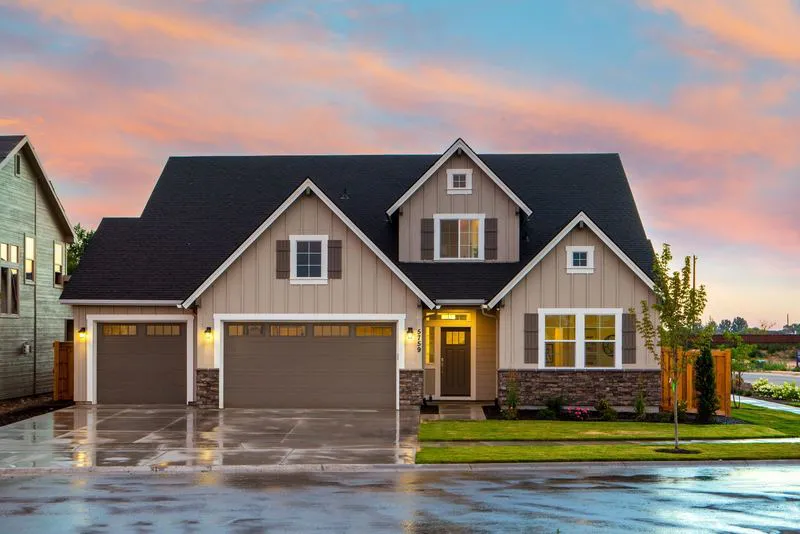
Two-story house with the garage lights on at dusk
A pre-approval, not a pre-qual, before the offer.
The inspection is yours. The appraisal belongs to the lender.
Your filters, our database of more than 2,000 buyers' worth of demand, and a reverse look at what just came on the market.
Call (904) 309-0609 and a person in this office answers.
This is the buyer file in order. Pre-approval, the search, the offer, the inspection, the appraisal, and the closing. Homestead comes after you own the house and occupy it on January 1.
Most of our buyers are not on orders. VA is one loan in the stack, next to conventional, FHA, and cash. Call (904) 309-0609 if you want a person to walk the file with you.
Table of Contents
 How a purchase runs
We do not start with a tour. We start with what you can actually close on, then we search, then we write. A pretty house you cannot finance is a Saturday. A house you can close on is the work.
The order is the same almost every time. A lender looks at income, credit, and cash. We set the search to the counties and the features you named. We watch new listings the day they hit, and we also go find houses that match instead of waiting for you to refresh a page. You tour. We write the offer on the FAR and Florida Bar contract. You inspect. The lender appraises if there is a loan. Title clears. You close. Then you file homestead, which is not a line on the closing statement.
A transaction coordinator owns the dates in software built for that. The inspection deadline, the loan commitment, and the walkthrough do not live in someone's text thread.
Pre-approval
A pre-approval is a lender looking at income, credit, and the cash you can actually bring. A pre-qual is a conversation. We do not write offers on a pre-qual.
Use a lender who will pick up the phone the week of the appraisal. We keep preferred lenders for that reason. You can bring your own. If we have never closed with them, say so early, because a silent loan officer is how a clean house falls apart on day twelve.
How long a pre-approval takes is its own page: how long pre-approval takes. Bring the documents the first time. A second request the week of the inspection is how contracts slip. Paystubs, the last two years if you are not on a straight salary, assets, and the name on the down payment if it is a gift. The underwriter is going to ask. Asking on Tuesday of closing week is the expensive version.
The search
Start wide, then cut. These are the same board, three doors:
County matters. A Duval search keeps Atlantic Beach, Neptune Beach, Jacksonville Beach, and Baldwin. A city-only Jacksonville search drops them. Clay, St. Johns, and Nassau are separate counties with their own taxes, insurance conversations, and commute. Tell us the gate, the job, or the school. We will not guess the county for you and call it a preference.
Narrow searches we already keep built, if one of them is the whole point: under $350,000, new construction, homes with pools, and oceanfront.
Save the search in our app and turn the alerts on. A house that matches at 9 a.m. is often under contract by dinner in the spring. The app is how you see it. We still call you when it is the one, because an alert is not the same as a person who has been inside houses like it.
How we hunt, not just how you browse
Your search is half of it. The other half is us looking for you.
The database
More than 2,000 buyers sit in our system. That sounds like a seller's tool, and it is, but it also tells us what is actually moving. When we are writing your offer we already know which houses in that pocket got attention and which ones sat. You should not be the person discovering that on day ten of an inspection.
Reverse search
We can run the search backward from a house you liked. Same price band, same beds, same area, the features you refused to give up. New listings that fit fall out of that search the morning they hit the MLS. You do not have to rebuild the filters every Sunday.
Keyword search
Filters miss things people only put in the remarks. A workshop, a dock, a generator, a fenced yard, a downstairs bedroom. We search the words, not only the checkboxes, and we throw out the listings that used the word without having the thing.
What just sold
Before you write, look at recently sold. Asking prices are advertising. Sold prices are the market you are bidding into.
The offer
Price, closing date, inspection period, and who pays which costs. In Northeast Florida the FAR and Florida Bar contracts are what we write. Custom in Duval, Clay, St. Johns, and Nassau puts deed stamps and the owner's title policy on the seller. Amelia Island is the exception people ask about. The title company is a checkbox.
Read who pays closing costs in Florida before you trade a credit for a price cut. They are not the same number. A seller who drops the price by $8,000 and a seller who gives you $8,000 toward your costs leave you with different cash to bring to the table. We run that on paper before we send the offer.
We also tell you when the offer is too cute. A low number with a long inspection, a sale-of-your-house contingency, and a request that the seller pay everything is not a strategy. It is a no. If you need the contingency because you have a house to sell, say so. There is a cleaner way to structure that, and it is the section further down.
Earnest money is real money. It goes to the title company, not to us. You get it back if the contract says you do. You do not get it back because you changed your mind after the inspection period.
Inspection, appraisal, and repairs
The inspection is for you. The appraisal is for the lender. They are different reports, on different days, for different reasons. What Jacksonville inspectors keep finding is on home inspection red flags. If the loan is VA, the appraisal has its own rules: VA appraisal vs a home inspection.
We go through the report and sort it. Safety and structure. Things that will hit you in the first year. Things that are the age of the house and not a negotiation. Then we ask for the first group, in a way the seller can answer. A forty-item list of every tired outlet is how you lose a house you wanted.
Matt is a Florida registered building contractor. If the report wants a roof, a panel, or a handful of repairs, we already know which contractors will show up, and we can tell you whether the number the seller offered is a real number. When the equity is there on the seller's side, some of that work can be done without you writing the whole check before closing. When it is not, we say so. A contractor license is for that conversation. It is not a promise that we remodel the house as part of the fee.
What the seller has to tell you
Florida sellers have to disclose known defects that materially affect value and that a buyer could not easily see. Most sellers here fill out a written disclosure form. Read it before the inspection, not after. It tells the inspector where to look.
A disclosure is not an inspection. "Unknown" is an allowed answer, and a seller who never lived in the house, an estate or an investor, may know very little. A condo or HOA adds its own documents. We read all of it with you and flag the lines that need a question before your inspection period runs out.
The loan
Conventional
A Fannie or Freddie loan, or a bank portfolio loan that acts like one. The down payment can be low. It is not zero unless a separate program says so. Mortgage insurance usually stays until you have enough equity. The appraisal is the lender's. The underwriter still reads income.
FHA
A government-insured loan with a lower down payment than many conventional files. The appraisal also looks at condition. Peeling paint, missing handrails, and a roof at the end of its life can hold the file. Do not assume a fixer is an FHA house.
VA
For people with eligibility. No down payment required on a full-entitlement purchase, and no monthly mortgage insurance. You still pay taxes, insurance, and the funding fee unless you are exempt. Occupancy is required. The VA appraisal checks minimum property requirements. The rest of that desk is the VA loan knowledge center, including a VA loan on a manufactured home.
Cash
No lender appraisal and no loan condition. You still want an inspection. Proof of funds is the document the seller will ask for. Cash does not skip title.
The lenders we send people to are on preferred lenders. First-time buyer programs, if that is you, are a separate page: Florida first-time buyer programs.
Title and closing
Title is who proves you will own it. The title company runs the search, holds the earnest money, clears the liens, and prepares the closing statement. In this market the seller usually picks that company. We still have a title company we prefer to see on our files, because the closer already knows how we work and the dates do not sit in an inbox. If the seller names someone else, we work with them. We do not pick a fight over the checkbox unless the company is going to miss the closing.
You will see the closing disclosure before you sign. Compare it to the estimate you got with the pre-approval. The rate, the cash to close, and the seller credit should be explainable in one sitting. If a number moved, ask that day, not in the parking lot.
Walk the house the day of closing or the day before. The contract gives you that. We go with you. Lights, AC, the appliances that were supposed to stay, and any repair the seller agreed to do. Then you sign, the deed records, and the keys move.
If you have a house to sell
A lot of purchases stall because the buyer still owns the current house. There are three ways we handle it, and we will show you the numbers on all three.
- List your house first, get it under contract, and write the purchase with a date that matches. The risk is the house you want does not wait.
- Write the purchase with a sale contingency. Some sellers will take it. Many will not if they have another offer.
- Ask this office for a cash offer on the house you are leaving. If the numbers work, that sale is not waiting on showings, and your purchase is no longer tied to a stranger's loan. It is usually less money than a full listing. We put that net next to the listed net and you choose. Start with the seller net sheet and the selling page.
After you own it
Homestead is not a line on the closing statement. You file it with the county property appraiser after you own the house and occupy it as of January 1. The map is the Florida property tax guide. The filing itself is homestead exemption. If you are moving from another Florida homestead, read portability before you assume the savings transfer themselves.
Insurance binds before closing, not after. Jacksonville roofs and flood zones decide that premium. If a house only works at a premium you have not seen, it does not work. We want that quote while you can still walk away, not as a surprise on the disclosure.
If you are buying your first Florida house, the buyer FAQ sits next to the first-time programs. A foreclosure is a different path: how to buy a foreclosure in Florida.
Rent or buy, and the down payment
Buying usually makes sense when you plan to stay long enough for the closing costs to wash out, often three to five years. If the next move is already on the calendar, renting can be the cheaper answer. We will say so. Compare the whole payment, not just principal and interest: taxes, insurance, any HOA dues, mortgage insurance, and upkeep.
You do not need 20% down. Conventional loans can start well below that with mortgage insurance, FHA asks for a small down payment, and VA can be zero for eligible buyers. Twenty percent removes mortgage insurance on a conventional loan. It is not the price of admission. Keep cash back for closing costs, reserves, and the first repair.
The first call
Tell us the payment you can live with, the cash you can bring, and the date you need to be in the house. Then the non-negotiables: beds, a yard, one story, a certain county, a certain drive. Everything else can flex. If everything is a non-negotiable, the search is a wish and not a plan.
Tell us if you have a house to sell, a lease to finish, or a rate you are not willing to go above. Those three facts change the offer we write more than the paint color you like. If a parent is giving the down payment, say that on this call. The lender has to paper the gift. It is ordinary. It is also slow if it shows up as a surprise deposit.
We will ask what you have already seen online. Bring the links. Half the time the house you love is pending, in the wrong county, or priced off a tax photo from 2014. We would rather say that in the first conversation than after you have driven across town.
On the tour
We are not there to talk you into the house. We are there to see the things the photos hide. The floor that slopes. The addition with no permit sticker. The roof that looks fine from the street and tired from the side yard. The neighbors, the ditch, the power lines, the road you would actually turn onto every day.
You should open the cabinets, run the water, and stand in the room you would use most. We will tell you when a smell, a stain, or a window is a negotiation and when it is the house. Matt's contractor license is useful on this walk, before you ever pay an inspector, because some houses are not worth the inspection fee.
Take notes on the spot. By the fourth house the kitchens blur. We rank them the same day: write, maybe, no. A maybe that sits for a week is usually a no, and the house you would have written on is gone.
The weeks under contract
Week one is the deposit, the inspection, and the insurance quote. The earnest money goes to the title company on the schedule in the contract. The inspector gets in while you can still cancel. The insurance agent prices the roof, the flood zone, and the wind. If that premium breaks the payment, we find out now.
The repair ask goes out before the inspection period ends. Not the day it ends. The seller needs time to answer, and you need time to walk away if the answer is no. Our coordinator is watching that date in the software so it is not a memory test.
The appraisal is ordered by the lender after the inspection is no longer a threat to the contract. You pay for it. You do not control it. If it comes in low, we reopen the price with the appraisal in hand. If it comes in at value, we leave it alone and let the loan keep moving.
The last week is the closing disclosure, the walkthrough, and the wire instructions. Wire fraud is a real way to lose a down payment. We will tell you to call the title company at a number you already have, not a number in a new email, before you send a dollar. Then you sign, the deed records, and you get the keys.
A condo or a house in an association adds one more document. The estoppel and the rules. Read the rental cap, the insurance the association carries, and any special assessment before the inspection period dies. A beautiful unit with an assessment you did not underwrite is not a win.
Why this office
- A pre-approval with a lender who answers, from a short list we already close with.
- Search tools on the site and in our app, plus reverse search and keyword search so you are not limited to the checkboxes.
- A database of more than 2,000 buyers that tells us what is actually getting shown, not just what is being asked.
- A transaction coordinator and the software that holds every deadline.
- A title company we know, so closing week is a checklist and not a new relationship.
- A broker who holds a Florida building contractor license, and contractors we can send when the inspection is real.
- A cash offer on the house you have to leave, when a listing will not move in time.
If you are buying from somewhere else, orders or a job or family, the method is the same with one extra constraint. You are not here for every showing. We do a live walkthrough, an inspector you did not find on a coupon, and a closing plan the lender agrees to. That version of the file is buying a Jacksonville home from out of state. Heroes programs, if they apply, are a phone call, not a banner: Homes for Heroes in Jacksonville.
Not sure who to hire? Start with our guide to choosing a Jacksonville real estate agent.
Call (904) 309-0609.
Keep going
- Preferred lenders
- Who pays closing costs
- Seller net sheet, if you are also selling
- What your current house is worth
- First-time buyer programs
- Buyer FAQ
- Selling a home
Call (904) 309-0609.