Florida Homestead Portability Real Estate Search
Address Search
Homestead Portability in Florida
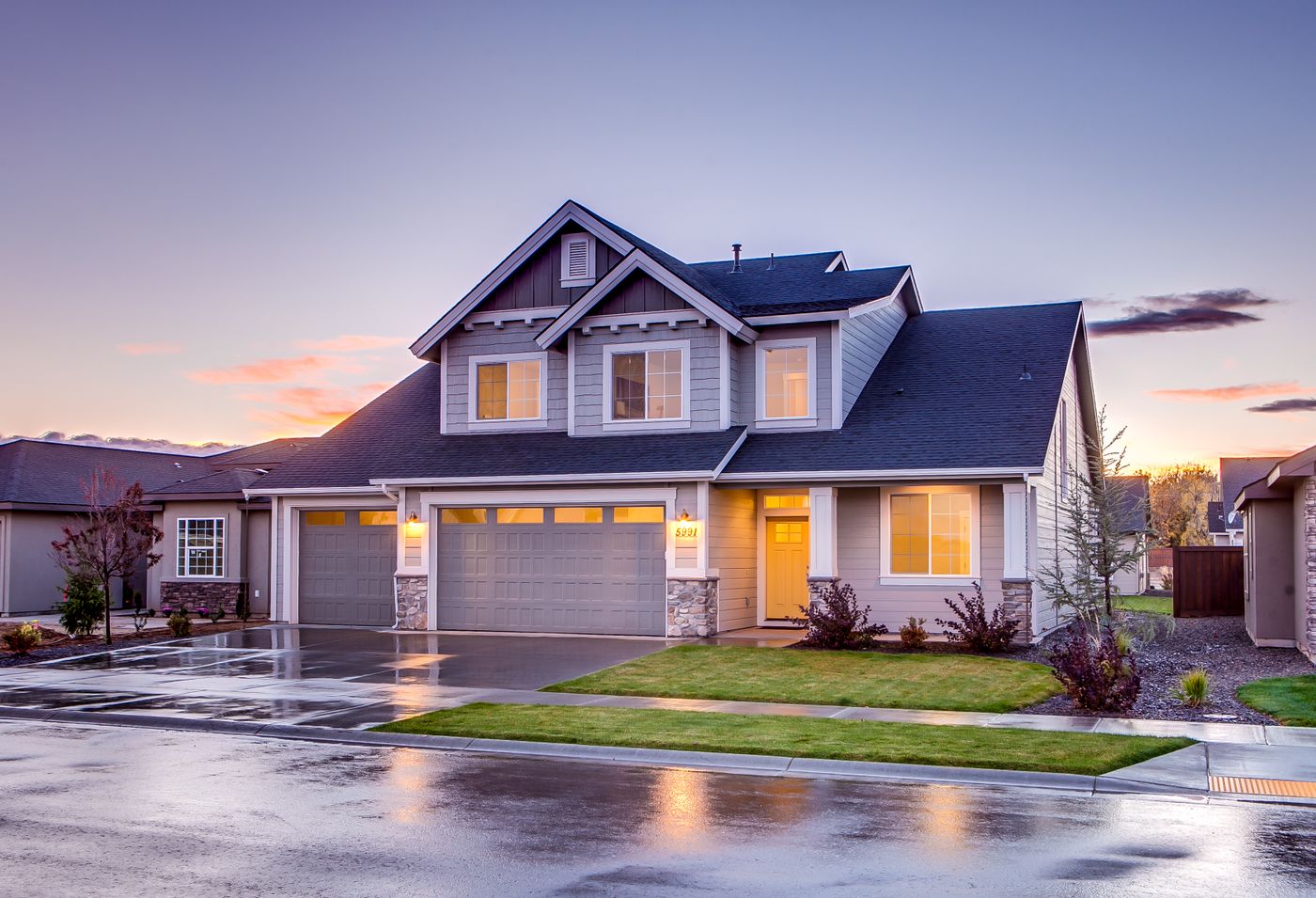
Two-story house on a wet street at dusk
Form DR-501T goes to the new county, with the new homestead.
The old county certifies the Save Our Homes difference. Do not invent the dollar amount.
One permanent residence. A second claim can become a lien.
January 1 occupancy. March 1 file date. Next open year is 2027.
Portability moves the Save Our Homes difference from your old Florida homestead to the new one. It stays inside Florida. A house you sold in another state does not send a number with you.
You file Form DR-501T with the new county, at the same time as the new homestead. The old county certifies the difference. Do not plug a guessed dollar amount into the payment.
Table of Contents
 What portability moves
Save Our Homes slows the rise in assessed value after you have homestead. The gap between just value and assessed value is the piece people try to carry to the next house. That gap is the portable piece.
For 2026 the Save Our Homes cap is 2.7 percent, the lesser of 3 percent and CPI. The cap is not the portable amount. The portable amount is the difference the old county certifies on that old parcel. It is different on every house. We will not invent a dollar figure for yours. The cap itself is on our Save Our Homes page.
The first $25,000, and the 2026 additional $26,411 on non-school levies, are the exemption on the new house. You still have to qualify for homestead there. Portability rides with that application. It does not replace it. The base rules are on our Florida homestead exemption page.
File DR-501T with the new county
Form DR-501T is the portability transfer. You file it with the new county, not with the county you are leaving. File it at the same time as the new homestead.
You have to own and occupy the new house as your permanent residence on January 1, then file by March 1. As of fall 2026, the 2026 window is closed. In 2026, March 1 was a Sunday, so the timely deadline was March 2, 2026. That date has passed.
The next occupancy date is January 1, 2027. The next timely filing date is March 1, 2027. A late file is an extenuating circumstances request, generally only until 25 days after TRIM, and TRIM season is summer.
The old county certifies the number
You do not tell the new county what the benefit is worth. The old county certifies the Save Our Homes difference. That certification is the number the new office uses.
If the old homestead was never granted, there is no solid difference to certify. Pull the old TRIM notice or the property appraiser printout before you write an offer that assumes a low tax bill on day one.
We will not put a portable dollar amount in a listing remark. Call the old county and ask for the certified difference. Then call the new county and ask how they will apply it. If you want a second set of eyes on the two bills, call (904) 309-0609.
Spouses and one house
Homestead is one permanent residence. Spouses do not each claim a house. The file asks for a Social Security number. A wrongful claim can become a lien, with a 50 percent penalty and 15 percent interest, under section 196.161.
If the old house is in one name and the new house is in the other, call the property appraiser before you file DR-501T. A death, a divorce, or one spouse staying on the old homestead changes whose benefit can move. The county decides that. We do not.
Put both spouses on the call. If the desk wants a marriage record or a death record, get it before March 1. Do not file two DR-501T forms for two houses.
Military moves in and out
Portability is Florida to Florida. Orders into NAS Jacksonville, Naval Station Mayport, or Blount Island from Norfolk, San Diego, or Kings Bay do not carry a Save Our Homes number. You still file homestead with the Florida county after you own and occupy the house on January 1.
A move from one Florida county to another is the DR-501T case. Clay to Duval, a St. Johns sale into Mandarin, or a Jacksonville house into Yulee: the new county gets the form, and the old county certifies.
If orders have you out of the house on January 1, call the property appraiser with the orders in hand. Do not assume a military waiver. We will not invent one. If you sell here and do not buy another Florida homestead, there is nothing to port. Call (904) 309-0609 and we can still help you sell.
The four county desks
File with the county where the new house sits. The old county only certifies. These are the four desks we send buyers to.
Duval County
Property Appraiser Joyce Morgan. File at homestead.coj.net. Phone (904) 255-5900. Exemptions desk, 231 E. Forsyth Street, Suite 260, Jacksonville.
The deed has to be in your name. The online session does not save. Allow about 60 days after closing for the deed to post, and file in person if it has not.
Clay County
Tracy Scott Drake. Start at ccpao.com or the portal at exemption.ccpao.com/Homestead/. Phone (904) 284-6305.
The office is on the second floor, 477 Houston Street, Green Cove Springs. Orange Park and Fleming Island use this desk.
St. Johns County
Eddie Creamer. The homestead and portability page is sjcpa.gov/homesteadportability. Phone (904) 827-5500.
That is the page St. Johns points people to for the transfer. Call for the counter. Julington Creek files here, not in Duval.
Nassau County
A. Michael Hickox. The filing page is Nassau homestead. Phone (904) 491-7300.
Yulee and Wildlight buyers use this desk. So does Amelia Island. Do not drive the Nassau deed to Forsyth Street.
Read the tax bill before you close
The seller's tax bill shows the seller's exemptions and the seller's Save Our Homes value. Your bill next year will not copy that number just because you plan to file DR-501T.
Ask for the prior TRIM notice and the current tax bill. After the deed records, file homestead and the portability form with the new county once you qualify. The dollars are whatever the old county certifies.
We walk that stack on Jacksonville, Orange Park, and Yulee files. Call (904) 309-0609.
Keep going
Call (904) 309-0609.
Newest Homes for Sale in Duval County

- 5 Beds
- 4 Baths
- 2,989 SqFt.
- 0 DOM

- 3 Beds
- 2 Baths
- 1,620 SqFt.
- 0 DOM


- 3 Beds
- 2 Baths
- 1,216 SqFt.
- 0 DOM

- 2 Beds
- 2 Baths
- 1,461 SqFt.
- 0 DOM

- 3 Beds
- 2 Baths
- 1,144 SqFt.
- 0 DOM

- 4 Beds
- 2 Baths
- 1,250 SqFt.
- 0 DOM


- 4 Beds
- 3 Baths
- 3,059 SqFt.
- 0 DOM

- 4 Beds
- 4 Baths
- 2,260 SqFt.
- 0 DOM


- 4 Beds
- 4 Baths
- 3,255 SqFt.
- 0 DOM

- 3 Beds
- 2 Baths
- 1,272 SqFt.
- 0 DOM

- 3 Beds
- 1 Baths
- 1,000 SqFt.
- 0 DOM

- 4 Beds
- 2 Baths
- 2,072 SqFt.
- 0 DOM

- 3 Beds
- 2 Baths
- 1,664 SqFt.
- 0 DOM

- 2 Beds
- 2 Baths
- 1,386 SqFt.
- 0 DOM

- 2 Beds
- 2 Baths
- 830 SqFt.
- 0 DOM

- 3 Beds
- 2 Baths
- 1,544 SqFt.
- 0 DOM

- 2 Beds
- 3 Baths
- 1,110 SqFt.
- 0 DOM

- 4 Beds
- 4 Baths
- 2,484 SqFt.
- 0 DOM

- 4 Beds
- 2 Baths
- 1,607 SqFt.
- 0 DOM

- 3 Beds
- 2 Baths
- 1,485 SqFt.
- 0 DOM

- 3 Beds
- 2 Baths
- 1,104 SqFt.
- 0 DOM
Address Search